
De-Influencing’i Dijital İletişimin Eleştirel Bir Nesnesi Olarak Yeniden Düşünmek
Yazarlar

Özet
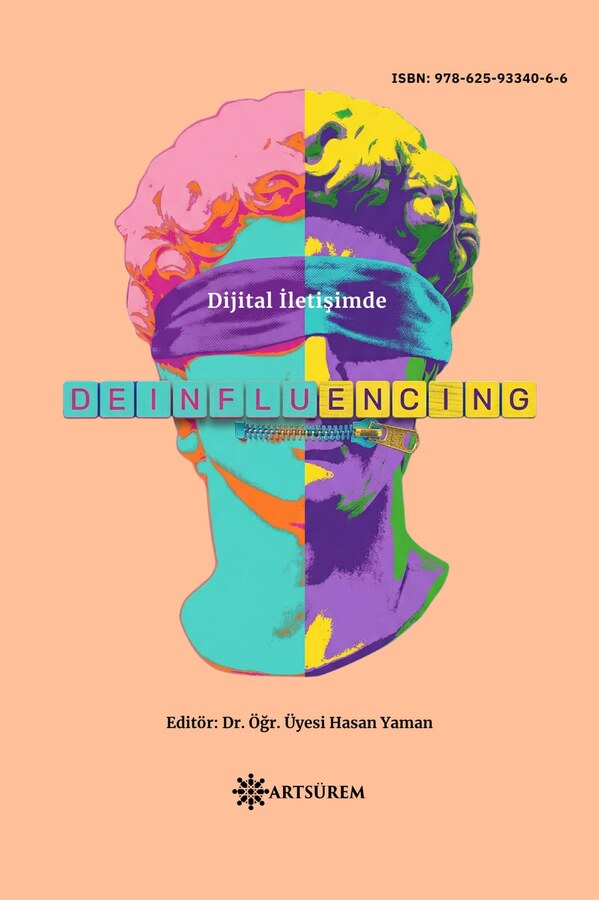
This editorial introduction positions de-influencing as a critical object of digital communication rather than a short-lived platform trend or a simple negative mirror image of influencer marketing. The chapter argues that de-influencing can only be adequately understood when consumption culture, anti-consumption, platform capitalism, digital labour, trust, authenticity, and user motivations are analysed together. Existing scholarship tends to remain fragmented across marketing, platform studies, consumer behaviour, digital labour, and trust research. As a result, de-influencing is often either narrowed to negative product evaluations or broadened so much that it becomes indistinguishable from anti-consumption in general. Against this fragmentation, the introduction proposes a common definition: de-influencing is a platform-specific, hybrid practice of refusal through which content creators discourage particular purchases, consumption habits, or recommendation regimes by mobilising claims of transparency, responsibility, and user protection. The chapter further advances the book-level argument that de-influencing is an immanent and contradictory response to the crises of recommendation and trust generated within platform capitalism. It neither stands wholly outside the system nor can it be reduced to pure opportunism. Rather, it operates at the intersection of critique and recapture, ethical restraint and visibility production, trust repair and self-branding. The introduction then maps the volume’s four analytic axes—genealogy and conceptual boundaries, consumption culture and ethical restraint, platform capitalism and digital labour, and trust, authenticity, and user motivations—before outlining a future research agenda. In doing so, it frames the volume as a coordinated attempt to define de-influencing conceptually, situate it historically, specify its formal variants, and demonstrate why it matters for communication studies in the platform age.
İndir
Sayfalar
Gelecek
Lisans

Bu çalışma Creative Commons Attribution-NonCommercial 4.0 International License ile lisanslanmıştır.
