
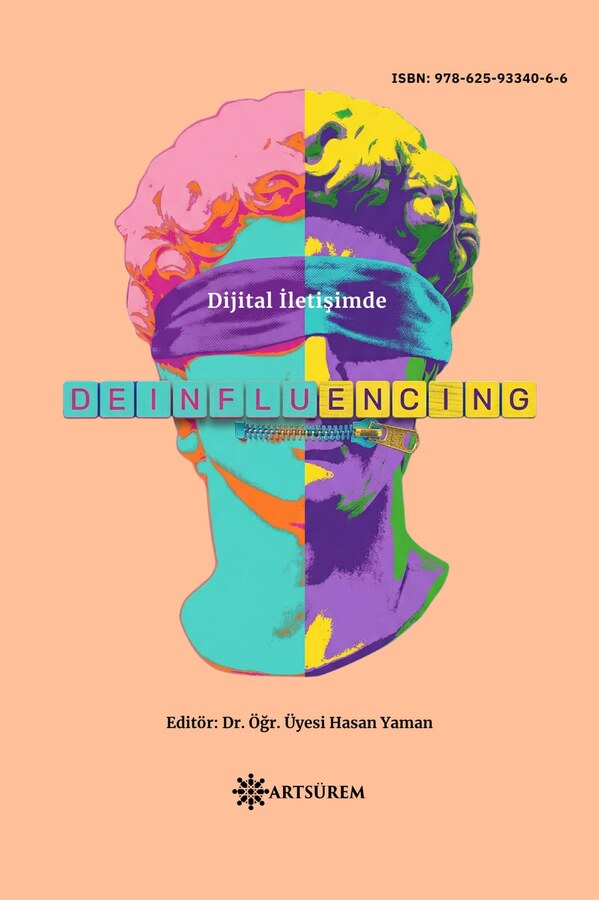
De-Influencing Sürecinde Dijital Güvenin İnşası ve Özgünlük Paradoksu: Kullanıcı Motivasyonları Ekseninde Etkileşim Ekonomisi
Yazarlar

Özet
The erosion of trust in the influencer model within the digital communication ecosystem—driven by excessive commercialization and persistent transparency issues—has weakened users’ credibility attributions toward both content and content creators. At this critical juncture, de-influencing practices emerge as a relational performance aimed at restoring trust, operating through critical evaluation and deliberate withdrawal rather than the consumption-driven rhetoric of traditional models. This orientation is shaped at the intersection of economic pressures, sustainability and ethical concerns, and digital fatigue, thereby rendering non-consumption a rational and legitimate choice. At the same time, the claim to authenticity acquires a paradoxical character, as it is produced through strategically staged sincerity; moreover, the engagement economy’s structural tendency to reward negative content enhances the visibility of critical discourse while simultaneously rendering ethical boundaries more fragile. In this respect, de-influencing can be conceptualized as a new paradigm that signifies a shift from an influence-centered persuasion model toward a continuously negotiated trust relationship grounded in transparency and accountability. Accordingly, identifying the rhetorical strategies, motivational dynamics, and structural constraints through which this transformation unfolds is crucial for understanding the future of digital trust. Within this framework, de-influencing is examined as a multi-layered interactional phenomenon, addressed through both conceptual and analytical lenses.
İndir
Sayfalar
Gelecek
Lisans

Bu çalışma Creative Commons Attribution-NonCommercial 4.0 International License ile lisanslanmıştır.
