
De-Influencing Practices in the Digital Communication Ecosystem: Forms of Refusal and Anti-Consumption Politics under Platform Capitalism
Authors

Synopsis
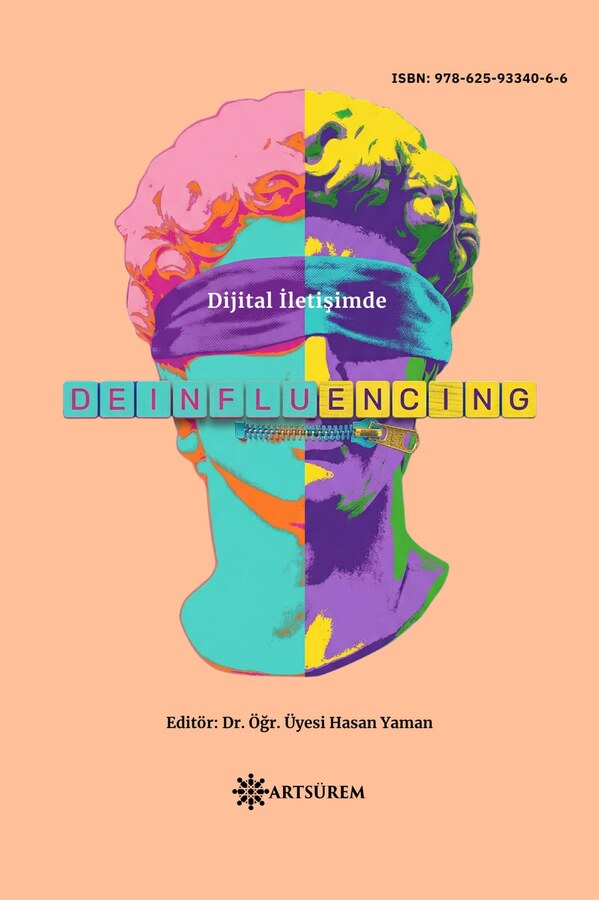
The phenomenon of “de-influencing” is conceptualized as a unique practice of rejection that has emerged within the context of digital communication, centered on platform capitalism. This approach contends that treating de-influencing merely as a fleeting social media trend or a negative offshoot of influencer criticism is analytically insufficient. In this vein, the text presents a concise genealogy spanning from the anti-haul culture on YouTube to its TikTok-centered proliferation and its discursive establishment on Instagram. In the subsequent phase, three fundamental distinctions are delineated to elucidate the concept's boundaries: the divergence between de-influencing and influencer criticism, its relationship with anti-consumerism, and the tension between ethical rejection and performative rejection. These distinctions reveal that de-influencing constitutes a unique communicative form, both in terms of content and its dependence on platform infrastructure. In the final stage of the analysis, a provisional typology is proposed. This typology comprises ethical, practical, performative, and ironic forms of rejection. The proposed typology is informed by recurring patterns in the literature. This typology demonstrates that de-influencing practices possess a multi-layered and context-sensitive character rather than a singular and homogeneous structure. Consequently, the study positions de-influencing as a hybrid anti-consumption practice shaped by the interplay between digital labor, the visibility economy, and consumer ethics.
Downloads
Pages
Published
License

This work is licensed under a Creative Commons Attribution-NonCommercial 4.0 International License.
